

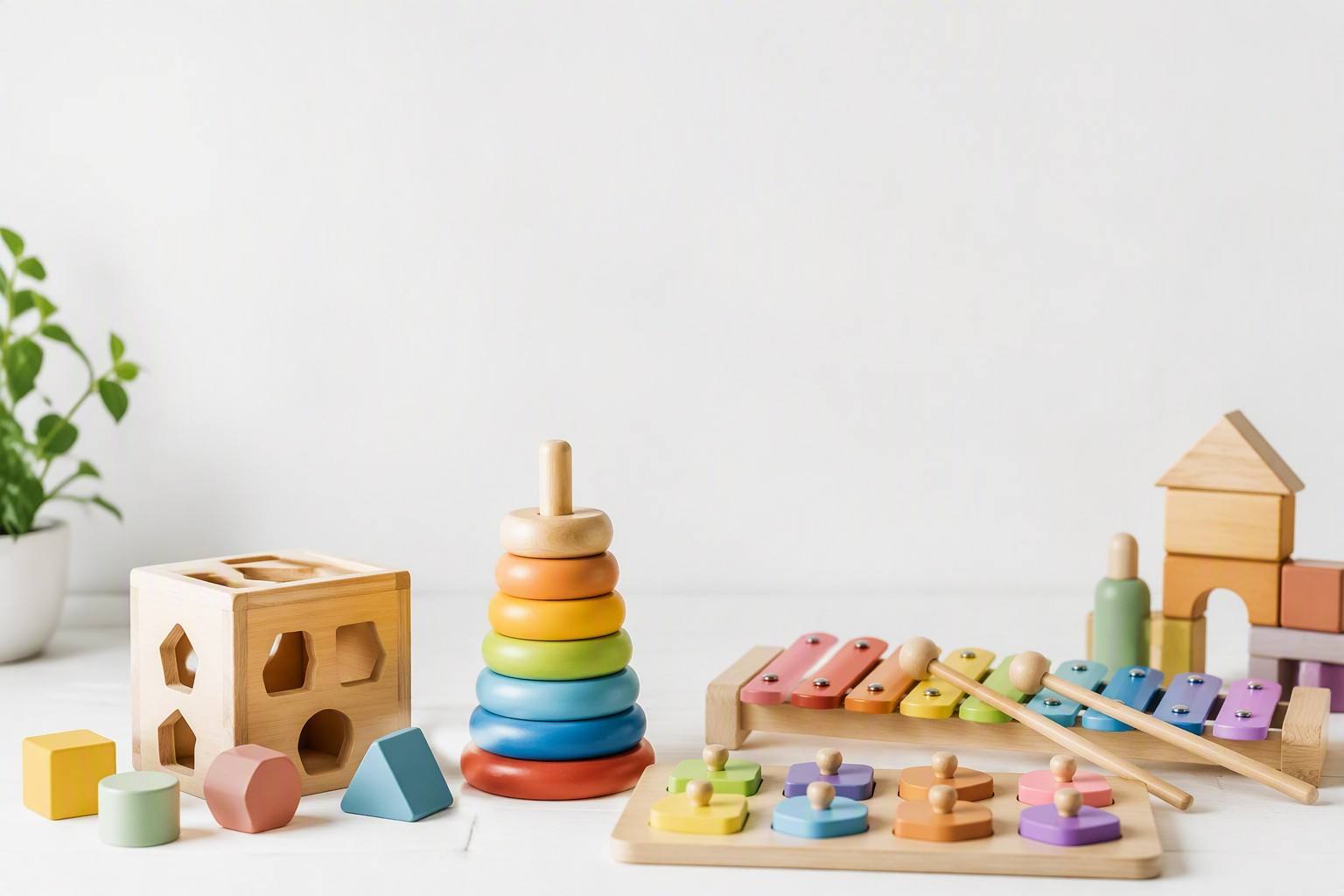
Why Educational Toys Matter: Building Your Baby’s First Learning Foundation
Walk into any toy store and you’ll see aisles labeled “Educational Toys.” It’s one of the most used — and most misunderstood — terms in the baby product industry. Are educational toys genuinely different from regular toys? Do babies actually learn from them, or is it just marketing? And most importantly: what should you look for when choosing toys that truly support your baby’s development?
The short answer is yes — the right toys do matter. But not in the way most people think.
The Science of Play: How Babies Learn
From birth to age three, a baby’s brain forms more than one million new neural connections every second. This period of rapid brain development — often called the “critical window” — is when the foundation for all future learning is built.
Babies learn through sensory-motor exploration: touching, mouthing, shaking, dropping, stacking, and eventually manipulating objects with intention. Every time your baby grasps a wooden ring, shakes a rattle, or fits a shape into a sorter, they are:
- Building neural pathways for fine motor control
- Developing spatial reasoning (how objects relate to each other in space)
- Strengthening cause-and-effect thinking (if I do this, that happens)
- Practicing focus and persistence (I didn’t get it the first time, let me try again)
Educational toys don’t “teach” in the way a flashcard or video does. They provide rich opportunities for discovery — and the baby does the learning through hands-on exploration.
What Makes a Toy Truly Educational?
Not every toy labeled “educational” earns the title. Here’s a framework for evaluating toys:
The Four Pillars of Educational Value
1. Active Engagement The child must do something — not just watch. A toy that plays music when a button is pressed is entertaining but requires minimal engagement. A wooden xylophone where the child produces the sound through their own action? That’s active learning.
2. Clear Feedback The toy should respond to the child’s actions in an immediate, understandable way. Stacking rings wobble and fall when misaligned — the feedback is visual and tactile. The child learns through the consequence.
3. Appropriate Challenge The toy should be just beyond the child’s current ability — challenging enough to require effort, but achievable with practice. This is the “zone of proximal development” where real learning happens.
4. Open-Ended Possibility The best toys can be used in multiple ways as the child grows. Wooden blocks can be stacked at 12 months, sorted by color at 18 months, and used to build castles at 3 years.
The Problem with “Smart” Toys
The baby tech market has exploded with electronic toys that claim to teach letters, numbers, colors, and even second languages. But research tells a different story.
A 2018 study published in JAMA Pediatrics found that electronic toys with lights, sounds, and automated features produced lower-quality parent-child interactions compared to traditional toys like wooden puzzles and blocks. Parents spoke less, used fewer words, and responded less to their child’s vocalizations when electronic toys were present.
Why this matters: Language development isn’t driven by hearing words from a toy — it’s driven by back-and-forth interaction with a responsive caregiver. The best educational toy is often the simplest one, because it creates space for that interaction to happen.
Matching Toys to Developmental Domains
Different toys target different areas of development. Here’s how to build a balanced toy collection:
| Developmental Domain | What It Covers | Recommended Toy Types |
|---|---|---|
| Fine Motor | Hand-eye coordination, pincer grip, dexterity | Stacking toys, shape sorters, threading beads, knobbed puzzles |
| Gross Motor | Balance, coordination, core strength | Push toys, baby bouncers, play gyms, balance boards |
| Cognitive | Problem-solving, cause and effect, memory | Object permanence boxes, simple puzzles, sorting games |
| Language | Vocabulary, communication, storytelling | Board books, wooden animal figures, play food sets |
| Social-Emotional | Empathy, turn-taking, self-regulation | Dolls, play kitchens, cooperative games |
| Sensory | Touch, sound, visual discrimination | Wooden instruments, textured toys, high-contrast materials |
The goal is not to buy one toy from every category. Start with 5–8 toys that span 3–4 domains. Observe which types your baby gravitates toward, and expand from there.
Age-by-Age Toy Recommendations
Newborn to 6 Months
At this stage, babies are all about sensory input. They’re learning to focus their eyes, track moving objects, and coordinate their hands.
- High-contrast black-and-white images or mobiles
- Soft wooden grasping toys and rattles
- Baby-safe mirrors (unbreakable acrylic)
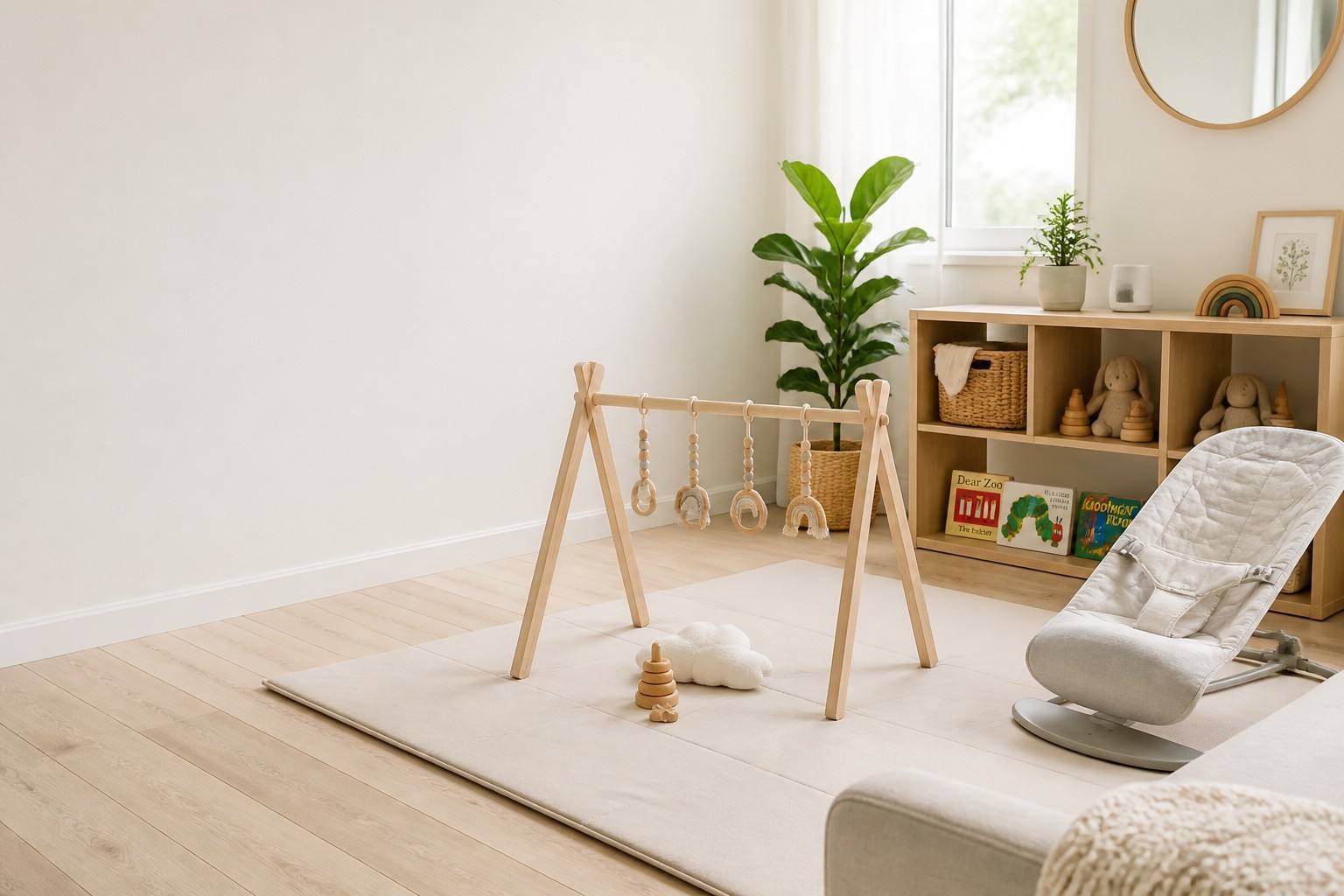
- Play gym with hanging elements at varying heights
6 to 12 Months
Sitting, reaching, and early object manipulation define this phase. Babies begin to understand that their actions have effects.
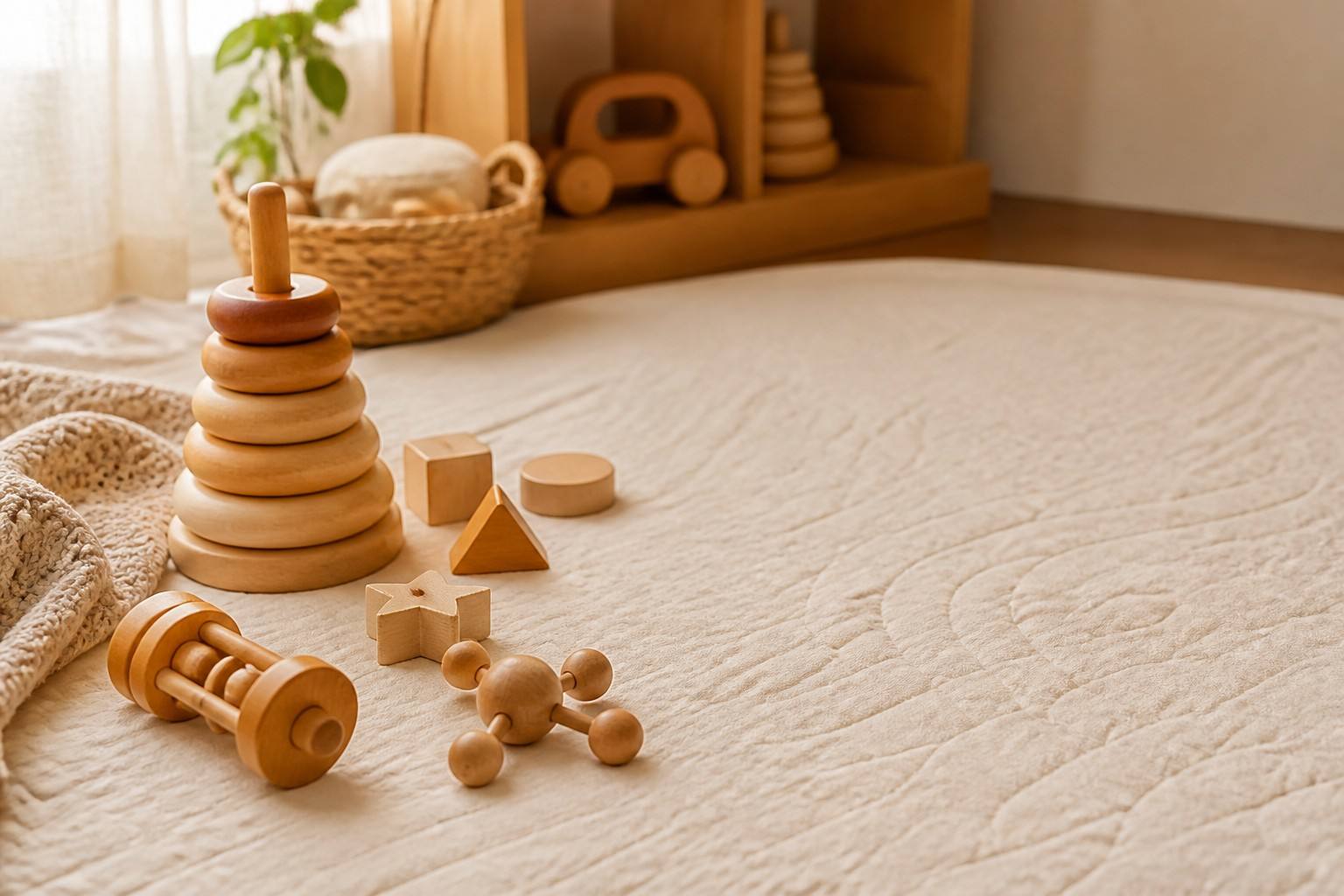
- Stacking rings and nesting cups
- Object permanence boxes
- Simple cause-and-effect toys (wooden ball drop, bell cylinder)
- Soft building blocks
12 to 18 Months
Walking changes everything. Toddlers want to move, carry, dump, and fill.
- Push-and-pull toys
- Large wooden building blocks
- Simple knobbed puzzles (3–5 pieces)
- Beginner musical instruments
18 to 24 Months
Imagination blossoms. Pretend play becomes the primary vehicle for learning.
- Play kitchen and food sets
- Dolls and simple dollhouse furniture
- Art supplies (large crayons, finger paints)
- More complex puzzles and sorting games
Three Signs You’re Choosing the Right Toys
Not sure if you’re on the right track? Look for these signs in your baby’s behavior:
- Sustained Focus: Your baby plays with the toy for several minutes without needing redirection. This is the opposite of the “five seconds and done” pattern common with overstimulating toys.
- Repetition with Variation: Your baby stacks, knocks down, and stacks again — but each time slightly differently. They’re experimenting, not just repeating.
- Joy in Mastery: That proud smile when the shape finally fits in the sorter? That’s intrinsic motivation at work — the most powerful driver of learning.
Why Konig Kids?
Since 2015, Konig Kids has specialized in one thing: designing and manufacturing educational toys that support healthy development from day one. Our products are:
- Designed with early childhood development principles — every toy has a clear learning purpose
- Made from sustainable, non-toxic materials — FSC-certified wood, water-based finishes
- Tested to international safety standards — ASTM F963, EN71, and CE certified
- Built to last — heirloom-quality construction that withstands years of play
We don’t make toys that entertain for five minutes. We make toys that build the foundation for a lifetime of learning.
A Final Thought
Your baby doesn’t need a room full of toys. They need a few thoughtfully chosen ones — and a parent or caregiver who sits on the floor with them, watches what they’re interested in, and follows their lead.
That combination — a good toy plus an engaged adult — is the most powerful educational tool there is.
Discover Konig Kids’ full range of educational baby toys at konig-kids.com.


Post a Comment
You must be logged in to post a comment.