

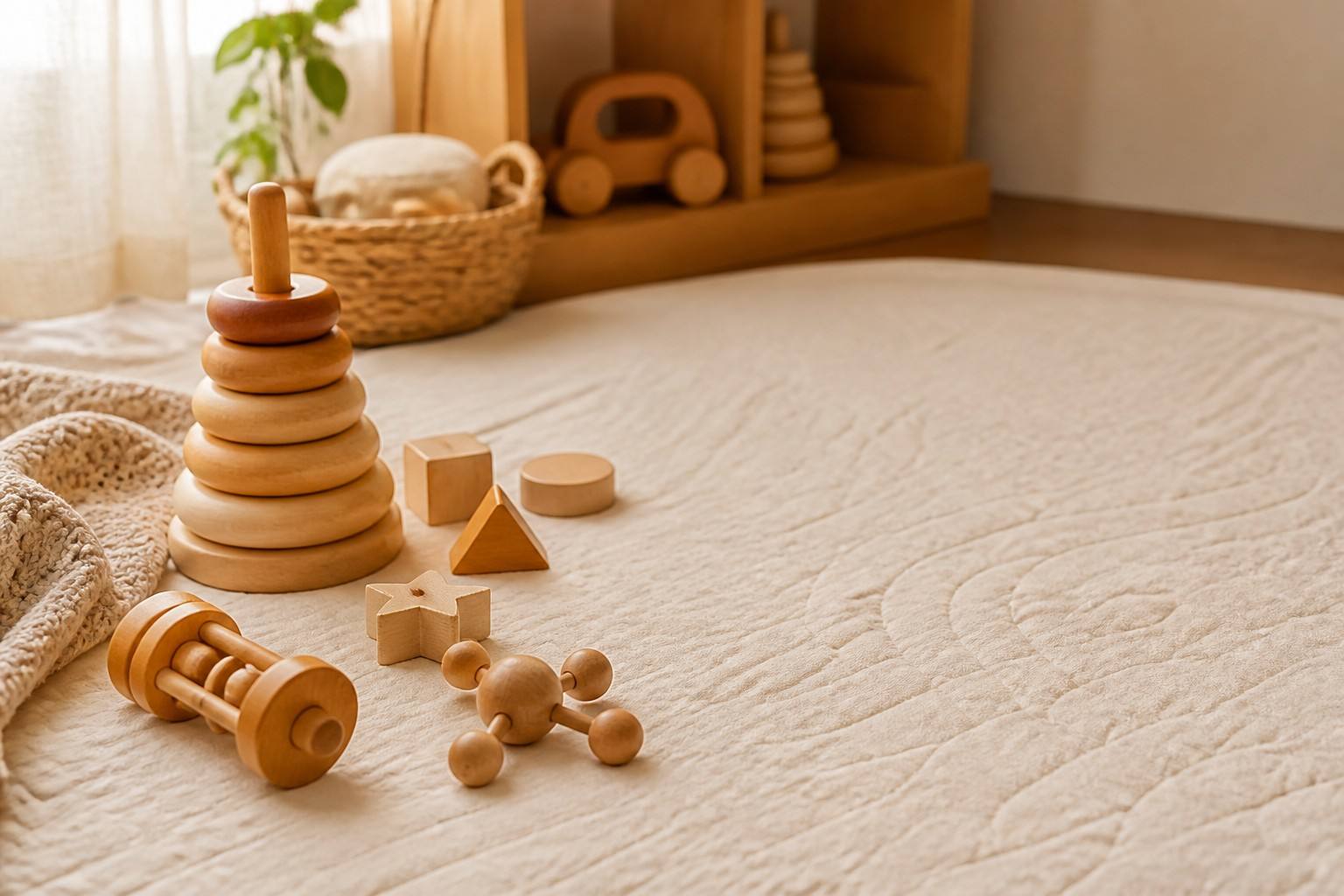
The Ultimate Guide to Montessori Wooden Toys for Baby Development (0–24 Months)
Every parent wants to give their baby the best start in life. In recent years, Montessori-inspired parenting has surged in popularity — and for good reason. At the heart of this approach lies a simple yet powerful tool: wooden toys. But what makes Montessori wooden toys different from flashy electronic gadgets, and how do you choose the right ones for each stage of your baby’s first two years? This guide covers everything you need to know.
What Makes a Toy “Montessori”?
The Montessori method, developed by Dr. Maria Montessori, emphasizes self-directed activity, hands-on learning, and collaborative play. Montessori toys share several defining characteristics:
- Natural materials — wood, cotton, and metal instead of plastic
- Simple design — no flashing lights, loud sounds, or overwhelming patterns
- Purpose-driven — each toy teaches one specific skill or concept
- Real-world connection — toys mirror objects babies see in daily life
- Self-correcting — children can see their own mistakes and fix them independently
Wood, in particular, offers sensory richness that plastic cannot match. It has weight, warmth, texture, and even a subtle natural scent. Babies learn about their world through touch, and wooden toys provide a far more stimulating tactile experience.
Why Wooden Toys Over Electronic Toys?
Electronic toys often do the playing for the child — press a button, and lights flash and songs play. While entertaining, they encourage passive engagement. Wooden toys, by contrast, require the child to be the active agent:
| Feature | Wooden Toys | Electronic Toys |
|---|---|---|
| Engagement | Active, child-driven | Passive, toy-driven |
| Sensory input | Natural texture, weight, warmth | Artificial lights and sounds |
| Skill focus | One clear learning goal | Multiple mixed stimuli |
| Durability | Long-lasting, heirloom quality | Battery-dependent, breakable |
| Creativity | Open-ended play | Limited, pre-programmed |
This doesn’t mean electronic toys have no place — but if you want to build focus, problem-solving skills, and creativity, wooden toys are the stronger foundation.
Choosing the Right Wooden Toys by Age
0–6 Months: Sensory Exploration
Newborns and young infants are absorbing the world through their senses. At this stage, the best toys are simple objects they can grasp, mouth, and observe.
Recommended toys:
- Wooden grasping beads — light enough for tiny hands, with varied textures
- High-contrast wooden mobiles — black-and-white geometric shapes stimulate visual development
- Soft wooden rattles — gentle sounds without electronic noise
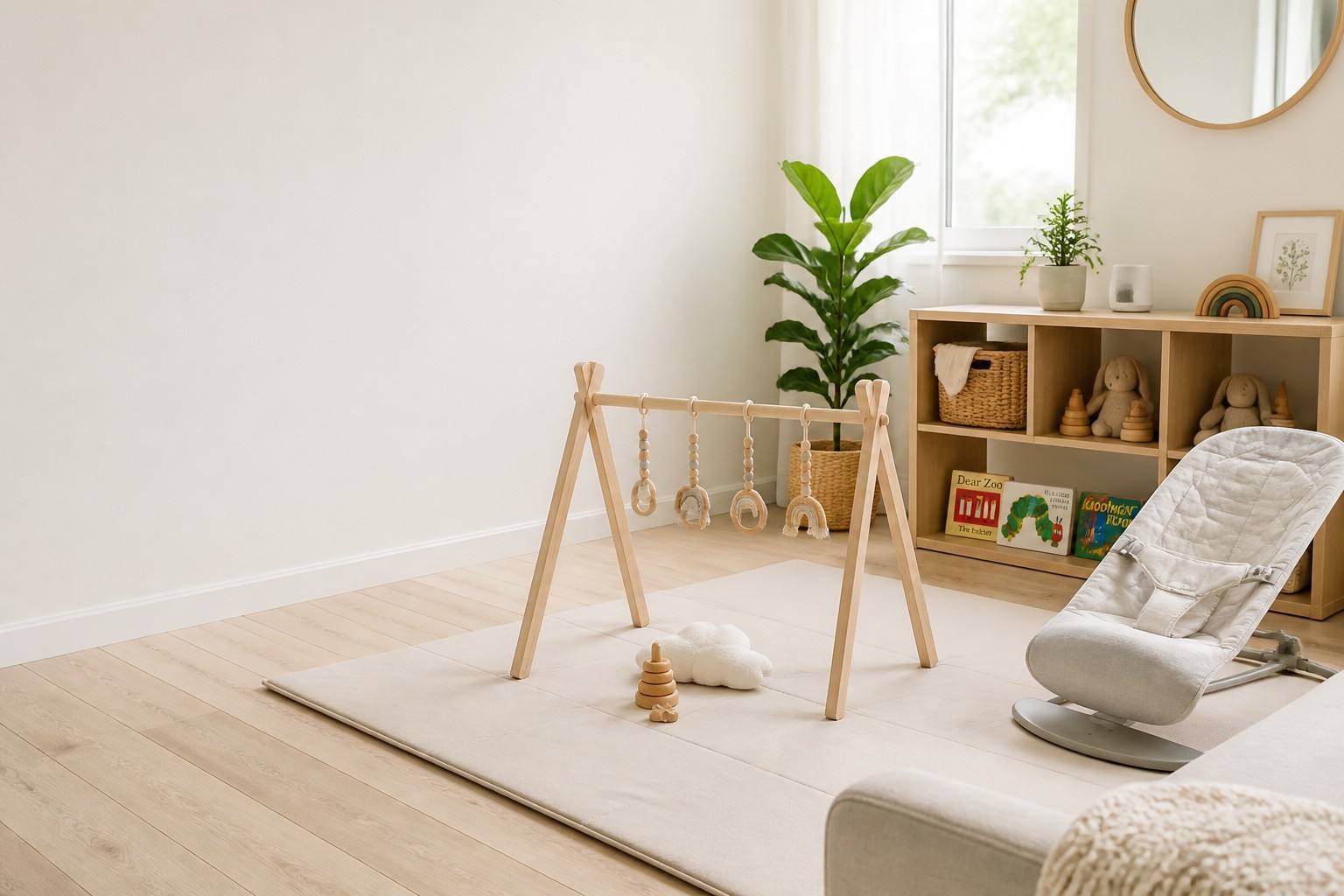
- Baby play gym with wooden hanging toys — encourages reaching and batting
Safety note: Always choose toys with smooth, rounded edges and non-toxic, water-based finishes. Konig Kids products meet ASTM F963 and EN71 safety standards.
6–12 Months: Cause and Effect
As your baby starts sitting up and reaching with purpose, introduce toys that reward their actions.
Recommended toys:
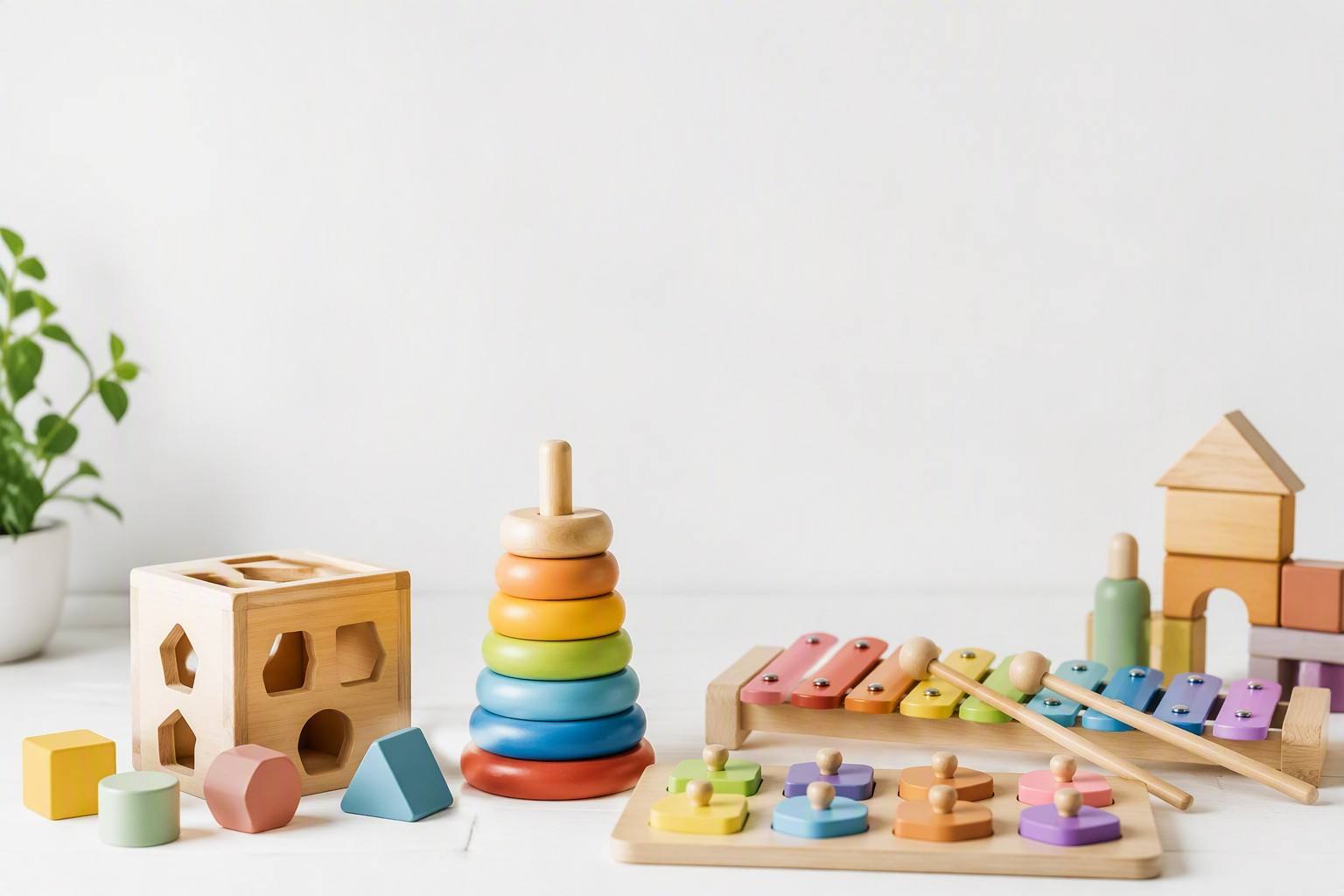
- Wooden stacking rings — teaches size differentiation and hand-eye coordination
- Object permanence boxes — baby drops a ball in, and it rolls out — a delightful lesson in cause and effect
- Wooden shape sorters — early problem-solving with geometric shapes
- Baby bouncers with activity trays — combine physical movement with fine motor play
12–18 Months: Movement and Coordination
Your toddler is likely crawling, cruising, or taking first steps. Toys should support gross motor development alongside fine motor skills.
Recommended toys:
- Push-and-pull wooden toys — encourage walking and balance
- Large wooden building blocks — open-ended construction play
- Simple wooden puzzles (3–5 pieces) — knobbed puzzles build pincer grip
- Musical instruments like wooden xylophones — introduce rhythm and auditory discrimination
18–24 Months: Imaginative Play
Toddlers at this age love to imitate the world around them. Pretend play becomes central to their development.
Recommended toys:
- Wooden play kitchens and food sets — mirror real-life activities
- Dollhouses and wooden figures — storytelling and social-emotional learning
- Threading and lacing beads — advanced fine motor practice
- Balance boards and climbing structures — gross motor confidence
How to Integrate Montessori Principles at Home
Beyond buying the right toys, the environment matters. Here are four practical tips:
- Less is more. Rotate 5–8 toys at a time. Too many choices overwhelm young children. Store the rest and swap them every two weeks — each toy feels new again.
- Display, don’t dump. Use low, open shelves where toys are visible and accessible. A tidy presentation invites your child to choose and engage independently.
- Follow the child. Observe what your baby gravitates toward. If they spend 20 minutes stacking rings, that’s where their developmental focus is right now — support it.
- Model, then step back. Show your baby how a toy works once, then let them explore. Resist the urge to correct. The learning is in the process, not the result.
Why Konig Kids Wooden Toys?
At Konig Kids, we’ve been designing and manufacturing baby educational toys since 2015. Every product is crafted with:
- FSC-certified sustainable wood
- Non-toxic, water-based paints and finishes
- Rigorous safety testing (ASTM F963, EN71, CE certified)
- Designs developed with early childhood education consultants
We believe the first two years of life build the foundation for a lifetime of learning — and the right toys make all the difference.
Explore our full collection of Montessori wooden toys at konig-kids.com.


Post a Comment
You must be logged in to post a comment.