

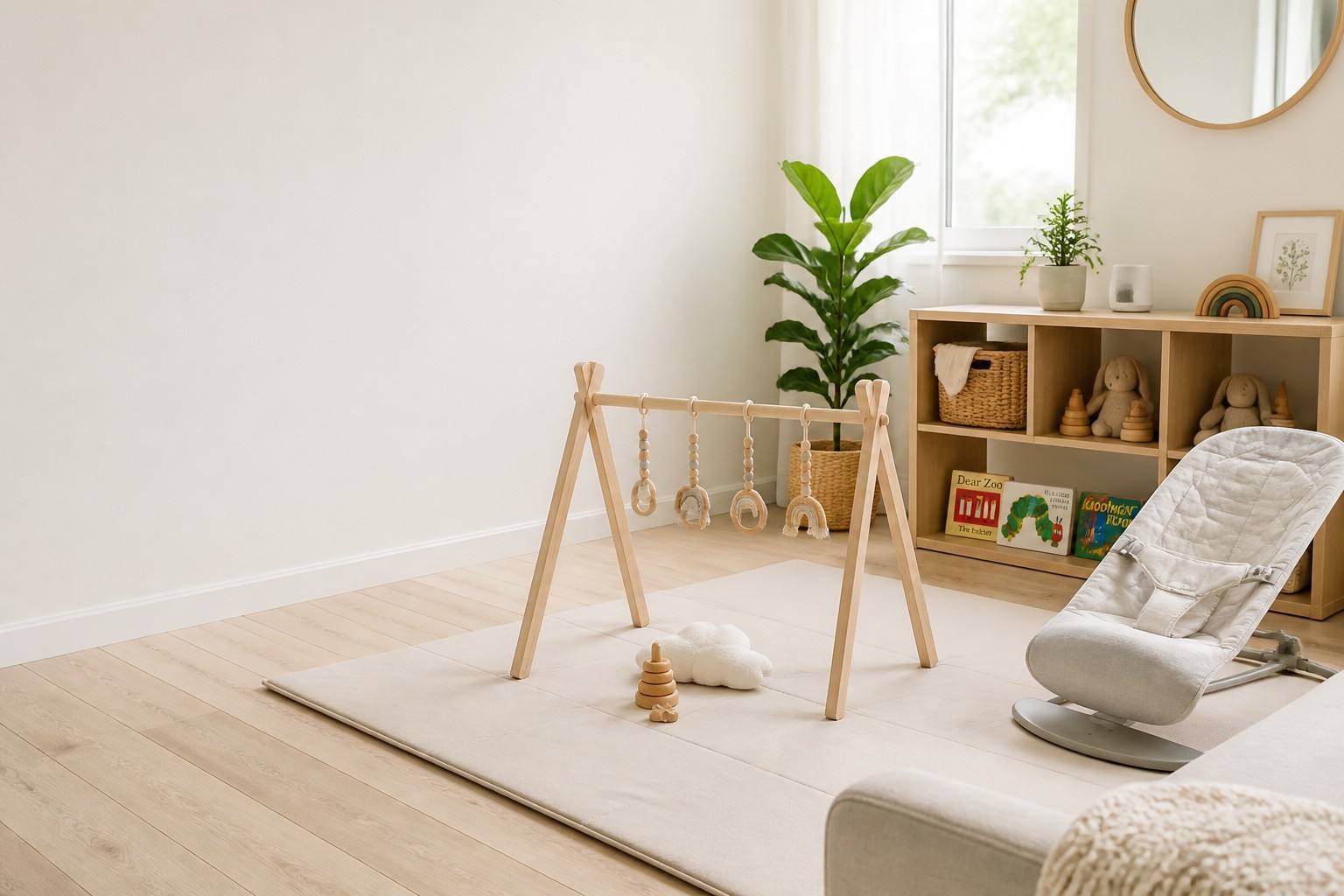
How to Create the Perfect Baby Play Area: Essential Products for New Parents
Setting up a baby play area is one of the most exciting parts of preparing for a new arrival — or refreshing your home as your little one grows. But between safety concerns, space constraints, and the sheer number of products on the market, it’s easy to feel overwhelmed. This guide breaks down exactly what you need to create a safe, stimulating, and beautiful play space that grows with your child.
Step 1: Choose the Right Location
A dedicated play area doesn’t need to be a separate room. A corner of the living room, a section of the nursery, or even part of a hallway can work — as long as it meets three criteria:
- Safe: Away from stairs, electrical outlets, sharp furniture edges, and cords
- Visible: You should be able to see your baby from where you commonly spend time (kitchen, desk, sofa)
- Defined: Use a play mat or rug to create a clear boundary — this helps babies understand “this is my play space”
Step 2: Start with a Quality Play Mat
The foundation of any play area is a good play mat. It cushions falls, defines the space, and gives your baby a clean surface for tummy time and play.
What to look for in a play mat:
| Feature | Why It Matters |
|---|---|
| Thick padding (1.5 cm+) | Absorbs tumbles during crawling and cruising |
| Non-slip backing | Prevents sliding on hardwood or tile floors |
| Non-toxic, BPA-free materials | Babies spend hours face-down on these surfaces |
| Waterproof and wipeable | Easy cleanup for spills, drool, and diaper leaks |
| Reversible or neutral design | Blends with your home decor instead of clashing |
A large play mat (at least 180 × 200 cm) gives your baby room to roll, crawl, and eventually walk — without constantly bumping into furniture.
Step 3: Add a Baby Play Gym
A baby play gym is the centerpiece of early play. From newborn to about 12 months, it provides endless opportunities for sensory exploration and motor development.
Key features of a great play gym:
- Adjustable hanging toys — vary the height as your baby grows from lying down to sitting up
- Variety of textures and sounds — crinkle fabric, wooden rings, rattles, and mirrors
- Sturdy wooden or metal frame — avoids the flimsy plastic arches that tip over easily
- Machine-washable mat — because babies are messy
Activity idea: For newborns, hang high-contrast black-and-white cards. For 4–6 month olds, add graspable wooden toys. For older babies, introduce cause-and-effect toys like bells or bead mazes.
Step 4: Include a Baby Bouncer or Rocker
A baby bouncer gives you a safe place to set your baby down while you cook, fold laundry, or simply enjoy a cup of coffee with two hands. It also supports your baby’s physical development:
- Gentle bouncing motion strengthens leg muscles and builds rhythm awareness
- Elevated seat angle helps babies observe their environment — great for cognitive development
- Built-in activity trays keep toys within reach for fine motor practice
Safety tip: Always use the harness, place the bouncer on the floor (never on elevated surfaces), and follow the manufacturer’s weight limit.
Step 5: Organize with Low, Accessible Storage
Montessori-inspired organization transforms a play area from chaos to calm.
Storage essentials:
- Low open shelves (2–3 tiers) — babies can see and reach their toys independently
- Small baskets or wooden bins — one basket per toy category (blocks, puzzles, musical instruments)
- Forward-facing book display — helps babies recognize book covers and choose what to “read”
The rotation rule: Display 5–8 toys and 3–5 books at a time. Store the rest in a closet. Rotate every two weeks. Your baby stays engaged, and your living room stays tidy.
Step 6: Safety-Proof the Surrounding Area
Even with a designated play area, curious babies explore. Take these precautions:
- Anchor furniture to the wall — shelves, dressers, and TVs can tip
- Cover electrical outlets with sliding plate covers
- Install corner guards on sharp furniture edges
- Secure cords and blinds out of reach
- Use a baby gate if the play area is near stairs
- Check for small objects on the floor daily — anything that fits through a toilet paper tube is a choking hazard
A Sample Play Area Setup
Products That Grow with Your Child
The best baby products are the ones you don’t outgrow in three months. At Konig Kids, we design with longevity in mind:
- Play gyms that convert from overhead hanging toys to sit-up activity centers
- Bouncers with adjustable recline angles for newborns through toddlers
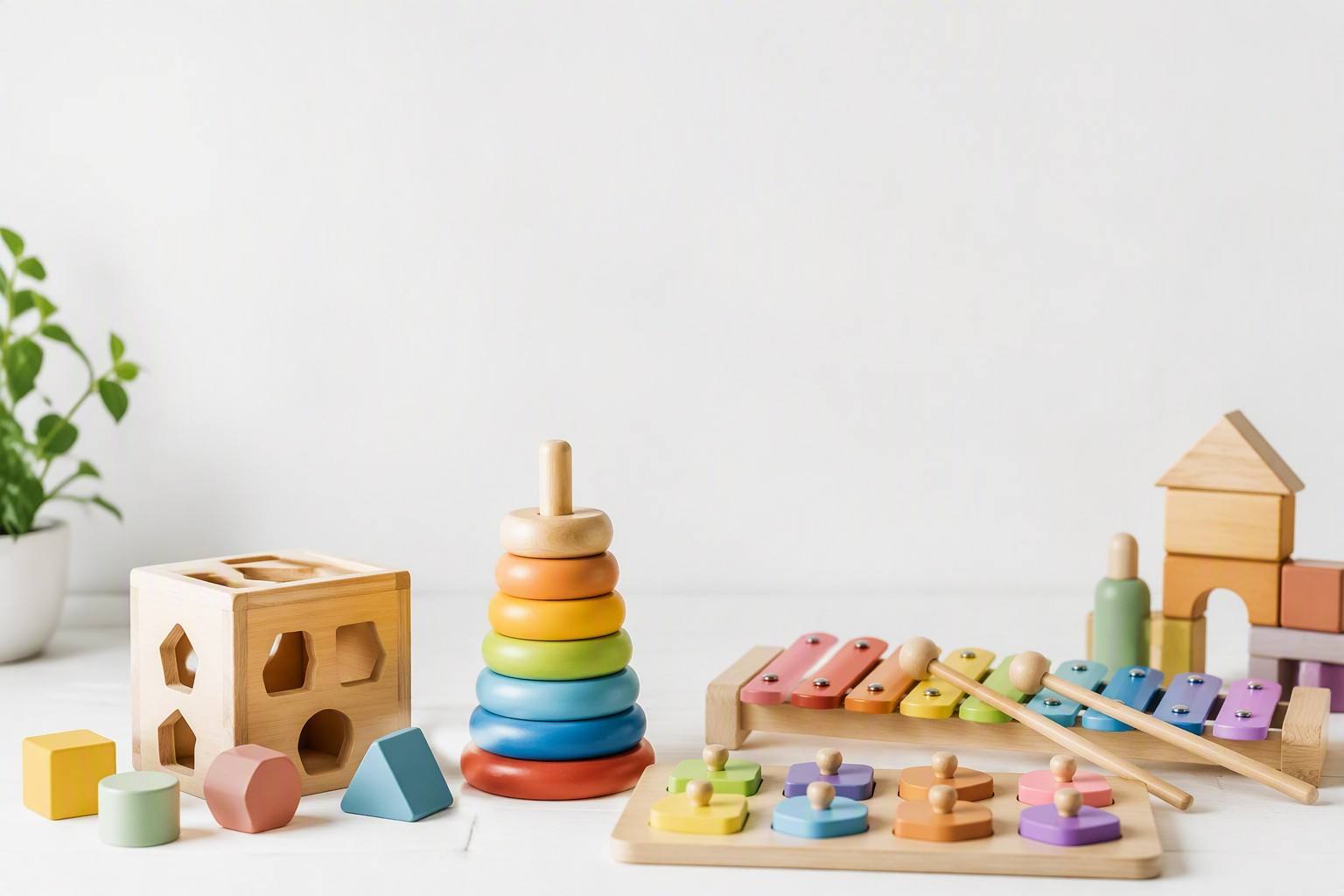
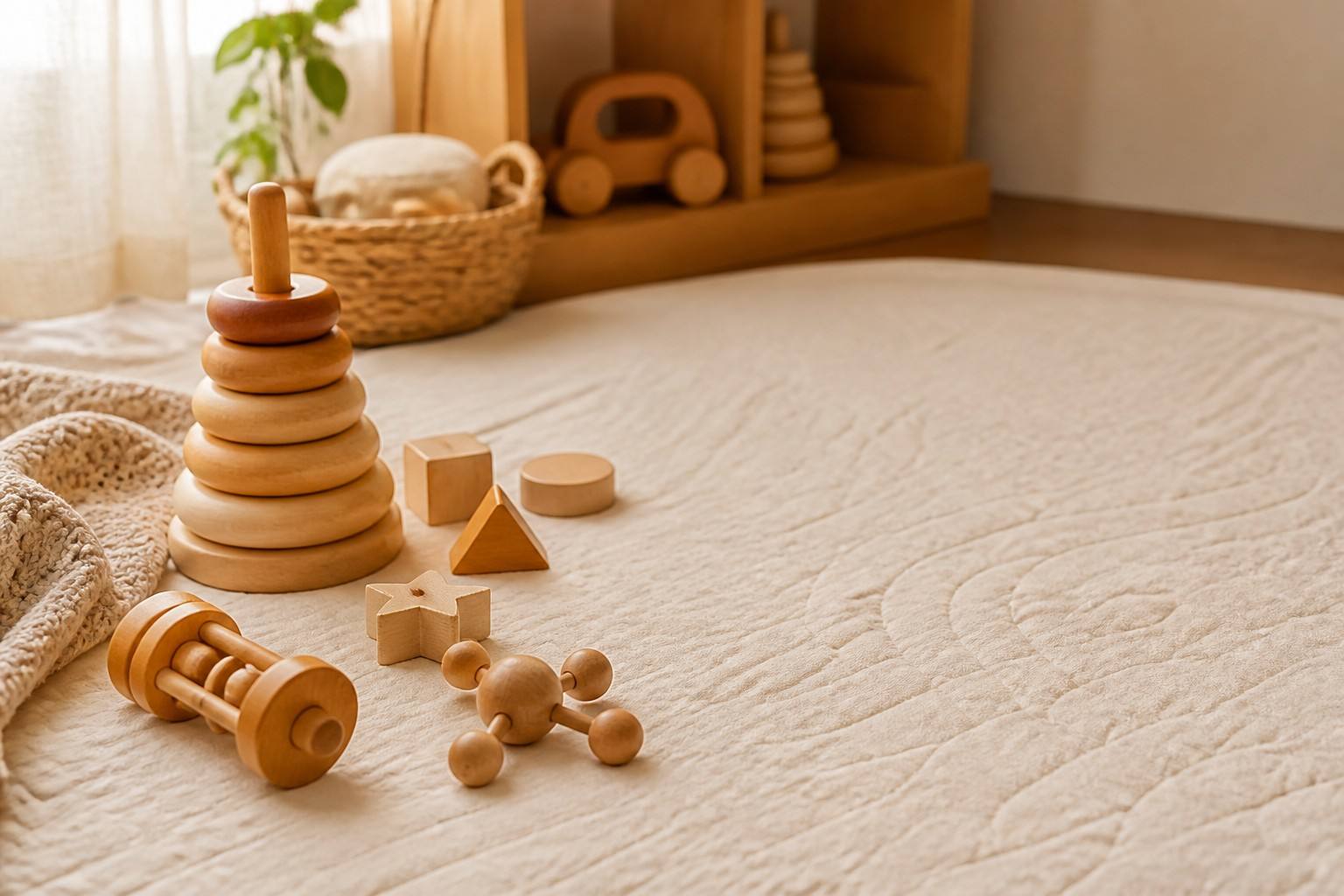
- Wooden toys that serve different developmental purposes at each age — stacking rings for 6-month-old grasping become color-sorting tools for 18-month-olds
Final Checklist for New Parents
| Essential | Priority |
|---|---|
| Large play mat (180+ cm) | Must-have |
| Baby play gym with wooden toys | Must-have |
| Baby bouncer or rocker | Highly recommended |
| Low storage shelves | Highly recommended |
| A few high-quality wooden toys | Must-have |
| Baby gate (if near stairs) | Safety essential |
| Outlet covers and corner guards | Safety essential |
Creating a baby play area isn’t about buying the most products — it’s about choosing a few well-designed, safe, and developmentally appropriate items that make both your life and your baby’s life better.
Shop Konig Kids play gyms, bouncers, and Montessori toys at konig-kids.com.


Post a Comment
You must be logged in to post a comment.